Photo Book vs Photo Album: Which One Fits Your Memories?
A photo book turns images and words into a fixed sequence. A traditional photo album keeps physical prints loose enough to move, replace or add later. The better choice depends on whether you want to author one story or keep an archive that can continue changing.
Words by Chris Franz.
The difference between a photo book and a photo album becomes obvious the moment you want to change something. In a traditional album, the print can usually move. In a photo book, the photograph belongs to a designed page and a fixed sequence. One behaves like a growing archive; the other behaves like an authored edition.
Neither is the grown-up version of the other. I keep loose prints for memories that are still accumulating and make books when a chapter has found its shape. The useful question is not which object is better. It is whether these photographs need freedom to keep changing or a design that gives them a deliberate beginning and ending.
The word album can also mean a folder on a phone or a printed product with bound pages. This guide compares a designed photo book with the traditional physical album that holds separate prints. Digital albums are useful for sorting and sharing, but they do not answer the same physical question.
The short answer
Choose a photo book when you want to edit a collection into one story, control image scale and white space, combine photographs with words and make several matching copies. Choose a traditional album when individual prints should stay tactile, replaceable and open to future additions. Use both when the archive is still growing but some parts already deserve a finished volume.
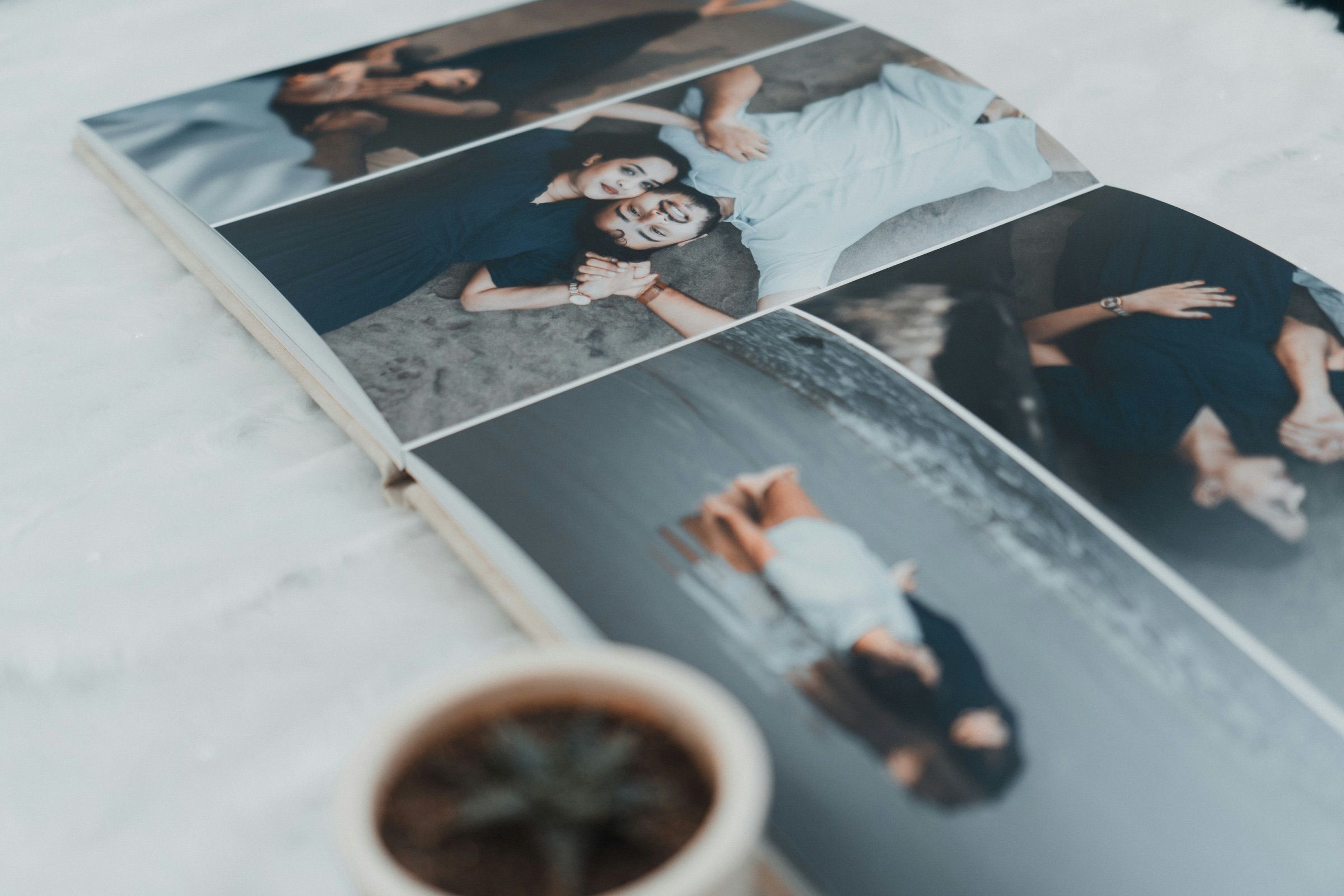
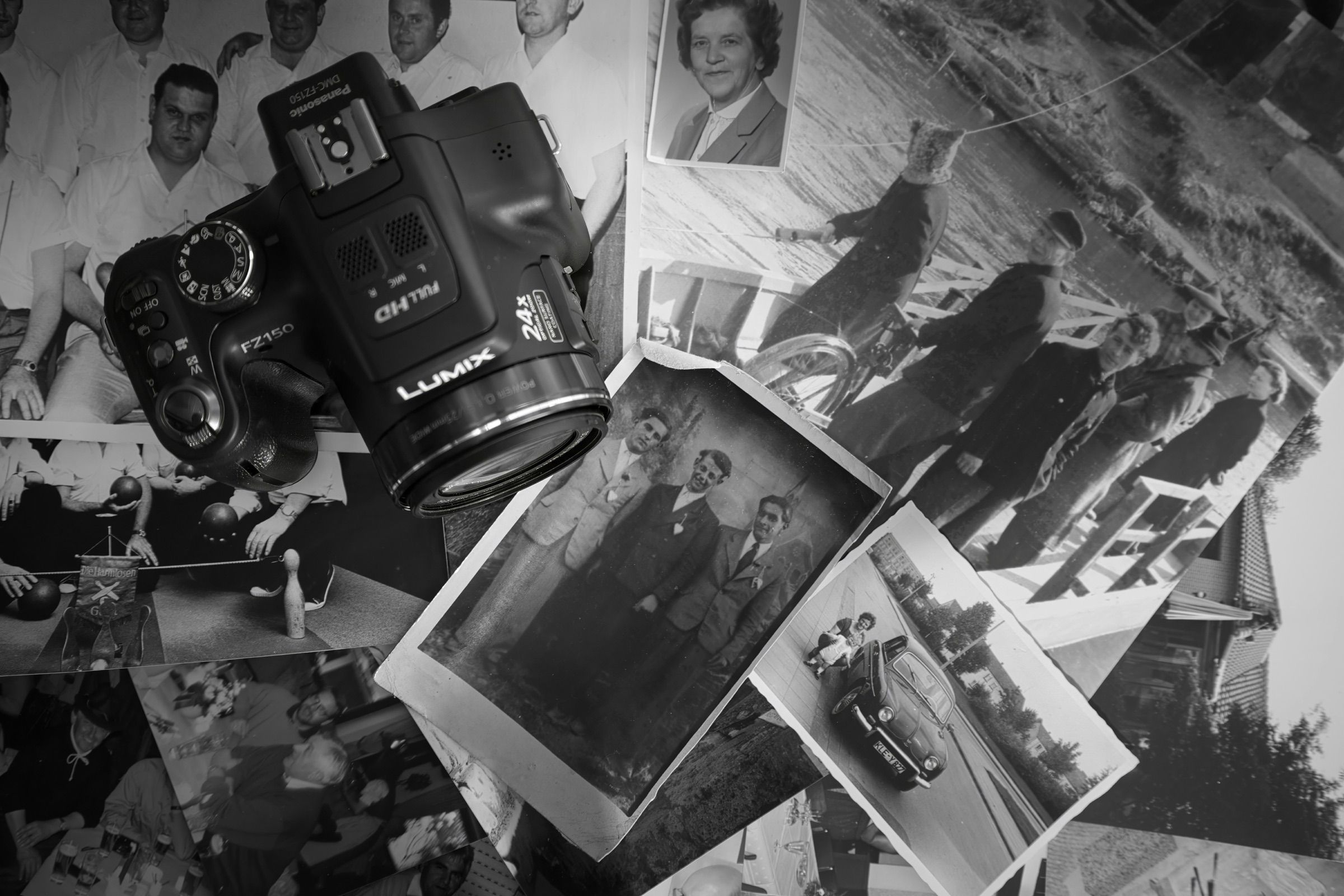
Photo book vs photo album
| Option | Photo book | Traditional photo album |
|---|---|---|
| How images live on the page | Photographs and text are printed as part of a designed page | Separate prints are mounted, slipped into pockets or held by an album system |
| Sequence | Fixed once printed and read as an intentional order | Often easier to rearrange, replace or extend |
| Image scale | One photograph can run large while others form pairs, grids or quieter details | Scale is usually limited by print size, pocket size or mounting space |
| Words | Titles, dates and longer passages can become part of the composition | Handwritten notes and labels feel immediate and can be added later |
| Copies | The same designed edition can be ordered again | Each assembled copy is usually its own object |
| Ongoing change | Best treated as a completed volume, followed by another volume later | Naturally suited to collections that keep receiving prints |
What a photo book does well
A photo book makes relationships between photographs visible. A broad scene can open the chapter; a portrait can occupy the next page; three details can compress an afternoon. The page itself becomes part of the storytelling through scale, order, crop and empty space.
That structure is useful when the collection has a boundary: one wedding, one journey, a baby's first year, a family yearbook or a portfolio. Editing before print forces decisions that a rolling camera archive can postpone forever. The reward is an object that can be read from cover to cover without asking the viewer to invent the order.
Words can be designed into the page too. A date may sit quietly beneath a photograph, while a longer memory earns its own pause. The placement is repeatable across every copy, which matters for gifts and family editions. The trade-off is finality. A printed sequence cannot accept next month's photograph without becoming a second volume.
If the fixed sequence appeals to you, start with a careful photo edit and decide what the collection is trying to remember before opening the layout.
Choose a photo book when
The story has a natural boundary
A trip ended, a year closed or an event has a clear beginning and finish that can support one volume.
Sequence changes the meaning
The order of arrival, people, details and closing frames matters as much as the individual photographs.
Image scale should vary
Some photographs need a full page while others work as a pair, a strip or a dense recap.
Words belong inside the design
Titles, dates or longer memories should repeat in a consistent visual language across the book.
You need matching copies
Several households should receive the same finished sequence without assembling each copy by hand.
A finished object will help you return
The camera roll is large enough that the memory needs an edited route back into it.
What a traditional album does well
A traditional album keeps the print visible as a separate thing. You can hold it, lift it from a pocket in many album systems and sometimes write directly beside it. That physical looseness suits archives formed over time: childhood pictures arriving from relatives, instant photographs from a party or family prints found in different boxes.
The album can remain unfinished without feeling broken. Empty pages wait for the next envelope. A date can be corrected by hand; a print can move when someone finally remembers where it belongs. This makes the format forgiving, although it can also delay the harder edit indefinitely.
Album construction varies widely. Pocket sleeves, adhesive pages, corners, paper, covers and bindings create different handling and preservation questions. Check the exact product and avoid assuming that the word album guarantees archival materials. The safest storage choice depends on the print process, album components, environment and how often the pages are handled.
Choose a traditional album when
The collection will keep growing
You expect new prints, rediscovered family pictures or later notes to join the same archive.
Handling the individual print matters
The object is partly about the photograph itself, including its back, edge, handwriting or original date stamp.
Rearranging is part of the process
The family is still identifying people and places, or the chronology remains uncertain.
Handwriting carries the voice
Notes by different relatives have value as marks made by those people, even when the page looks less uniform.
Every print has its own history
Original lab prints, instant photographs and inherited pictures should remain distinct objects rather than reproduced page elements.
One evolving copy is enough
The pleasure lies in maintaining a single family object rather than distributing identical editions.
The strongest archive often uses both
An album can hold the open collection while a photo book closes one chapter. Keep the loose prints, inherited pictures and new additions flexible. When a group becomes clear enough to edit, make a book from that part and leave the source archive intact.
This works particularly well for family history. The album protects handwriting and original objects. A book can then gather selected photographs with verified names, a readable chronology and copies for several branches of the family. The reproduction is an interpretation; the originals retain their own history.
The same logic suits everyday phone photography. A digital album can collect the year as it happens. A family yearbook turns the final selection into a designed annual volume. Each system gets one job, and none has to pretend it can solve every kind of memory.
The Family Yearbook Loop is one way to move from a growing monthly collection to a finished book without rebuilding the year in December.
Choose by the job, not the label
| Option | Best starting choice | Why |
|---|---|---|
| A wedding story for the couple | Photo book | The day has a sequence, important changes of pace and images that need different scale |
| Original family prints still being identified | Traditional album or archival storage first | The order, names and selection may change as relatives add information |
| Instant photos from an ongoing household tradition | Traditional album | Each print remains tactile and new pictures can join the same object |
| One trip shared with several households | Photo book | The same edited sequence can be reproduced as matching copies |
| A child's full archive plus one annual story | Both | The archive stays open while each year receives a clear finished volume |
Why the blank page matters less now
The old argument against photo books was the work of building every page. Art of Sundays changes that starting point. Choose a story direction, a handcrafted theme and a book format; SmartEngine turns the edited photographs into a complete first version with a cover, sequence, layouts and image placements already composed.
That does not make the photo book behave like an album. The final sequence is still fixed in print. It does make authorship easier to begin because you react to a designed book instead of arranging an empty canvas. Change the cover, replace a photograph, select another compatible layout, adjust the crop, edit the words or move the spreads until the edition feels right.
Read how SmartEngine builds the first draft for the current inputs, Story Mode, print constraints and editor controls behind that first version.
If page rhythm is the deciding factor, the photo book layout guide shows how a fixed sequence can use scale and white space in ways a row of equal prints cannot.
Photo book vs photo album questions
Turn the selected memories into a book
Explore Art of Sundays photo books when the collection is ready to become a designed, finished edition.
Choose a photo book when these memories deserve a finished edition. In Art of Sundays, SmartEngine begins with a complete version inside a handcrafted theme, while the Studio keeps every meaningful choice editable before the book reaches print.
Explore photo books